A desk mat engineered to keep your hands warm, your devices safe, and your focus unbroken through every cold working day.
Or 4 interest-free payments with Shop Pay
Ordering outside the US or UK? Contact us to arrange your order.


Does any of this sound familiar?
Cold hands aren't a minor inconvenience. They break concentration, slow your typing, and make every working day slightly worse than it needs to be. Heatka was engineered specifically for this problem. Not a workaround. A solution.
Heatka was designed by people who work at desks, for people who work at desks. It doesn't just warm a surface — it warms your hands exactly where they rest, delivering consistent heat across the full mat surface from the moment you plug in. No bulk. No smell. No timer anxiety. No gloves. Just warmth at your desk, working quietly in the background.
The Heatka Heated Desk Pad heats evenly across the full surface, bringing consistent warmth to your wrists, palms, and forearms throughout the working day. No cold spots, no hot patches. Just steady, reliable warmth exactly where your hands rest, from the moment you plug in until you're done for the day.
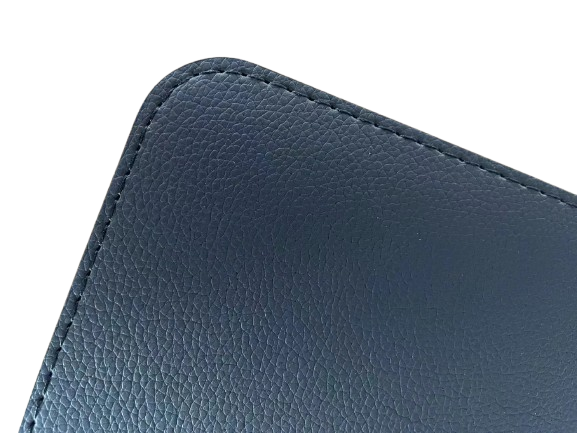
Cheap heated mats split apart when the internal heating element expands. Heatka uses edge stitching, the same method used in professional peripherals, so it holds its shape and structure over years of daily use. The PVC leather surface has no plasticky feel or chemical smell, and looks like it belongs at your desk.
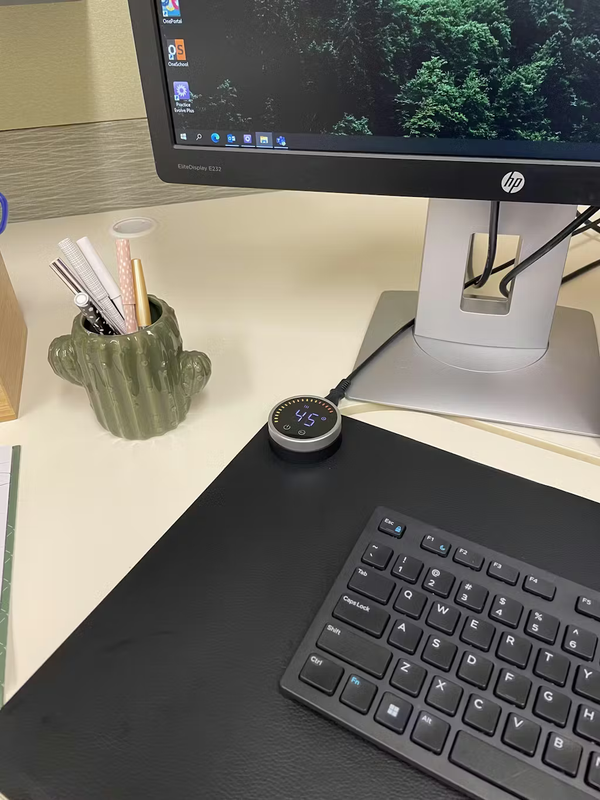
The large LED dial display isn't just functional. It looks like precision equipment rather than a novelty gadget. Easily displays multiple heat levels and an auto shut-off function & timer. Plug in. Set your level. Work. That's it.
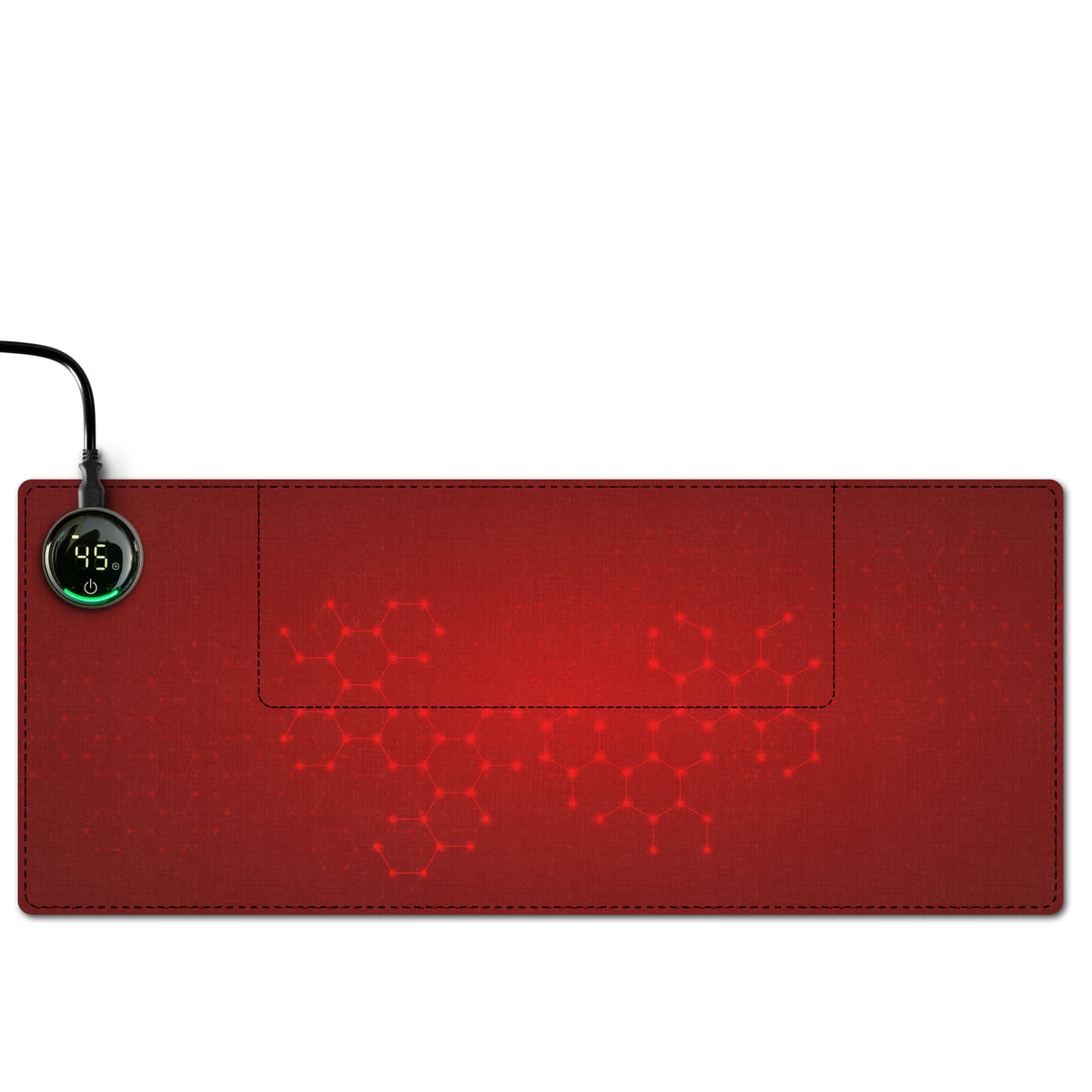
Consistent Warmth, Exactly Where You Need It
The Heatka mat delivers steady, even heat across the surface of your desk, keeping your hands comfortable without sudden temperature spikes or hot spots. It maintains a consistent level of warmth so you can focus on your work, not adjusting settings.
Why this matters: Comfort should be predictable. This is warmth you can rely on all day.
How to Use It
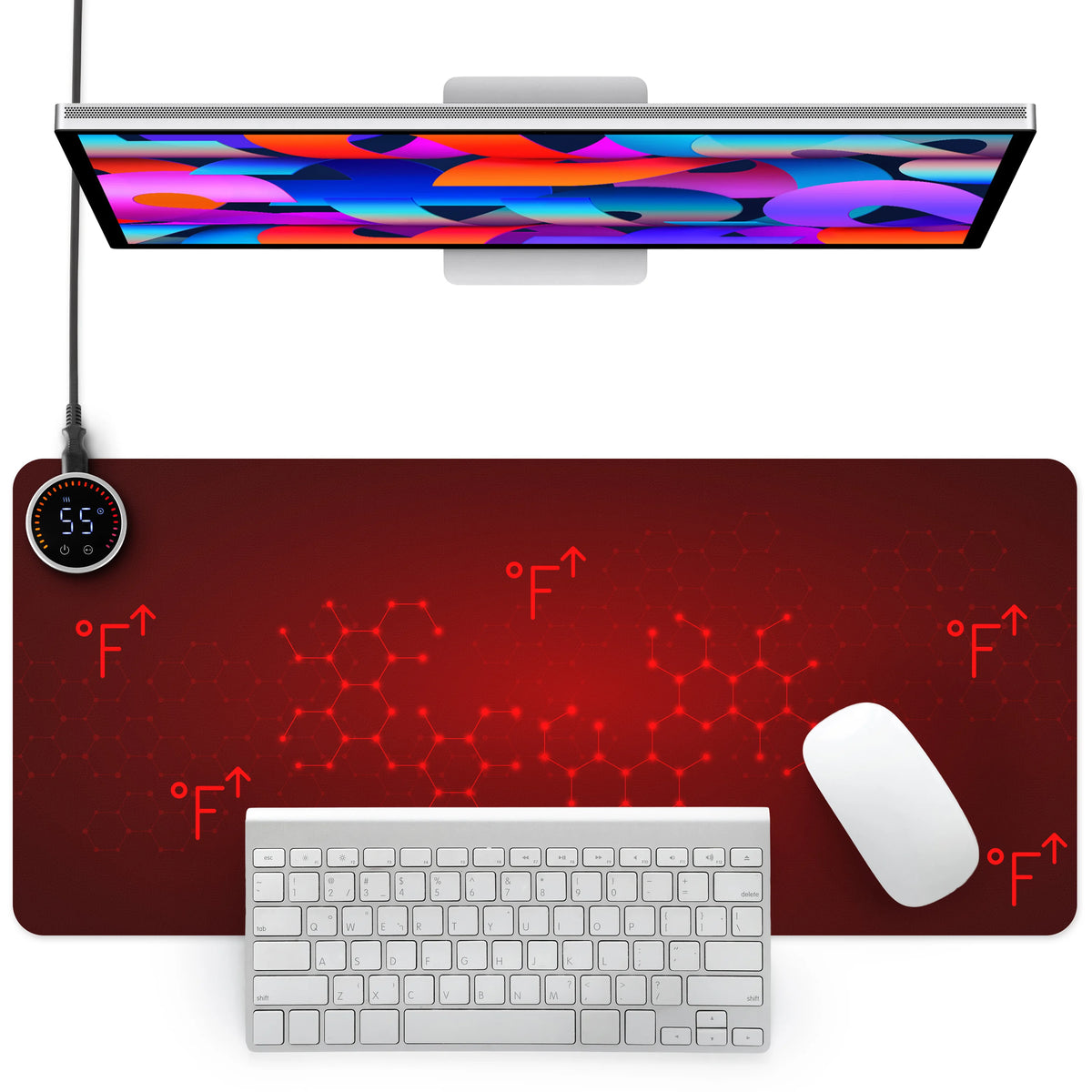
It's super easy to set up. Simply plug it in, tap the on button and adjust the temperature to suit you. Our heated mouse mat offers six heat options (30°, 35°, 40°, 45°, 50°, and 55°) which you can easily swap between by tapping one button. You'll feel your hand warmer beginning to warm almost instantly and it will fully warm up in under 15 minutes.
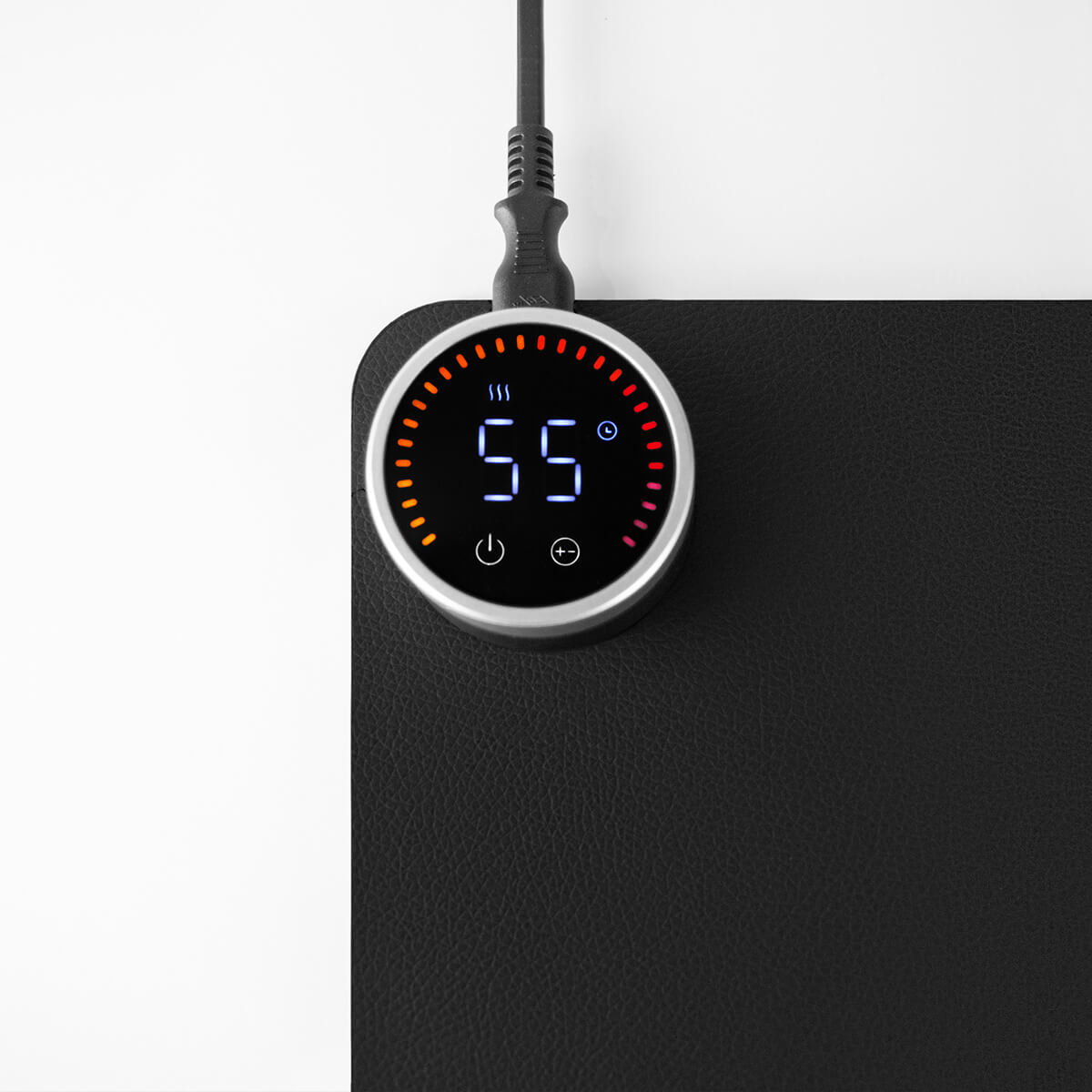
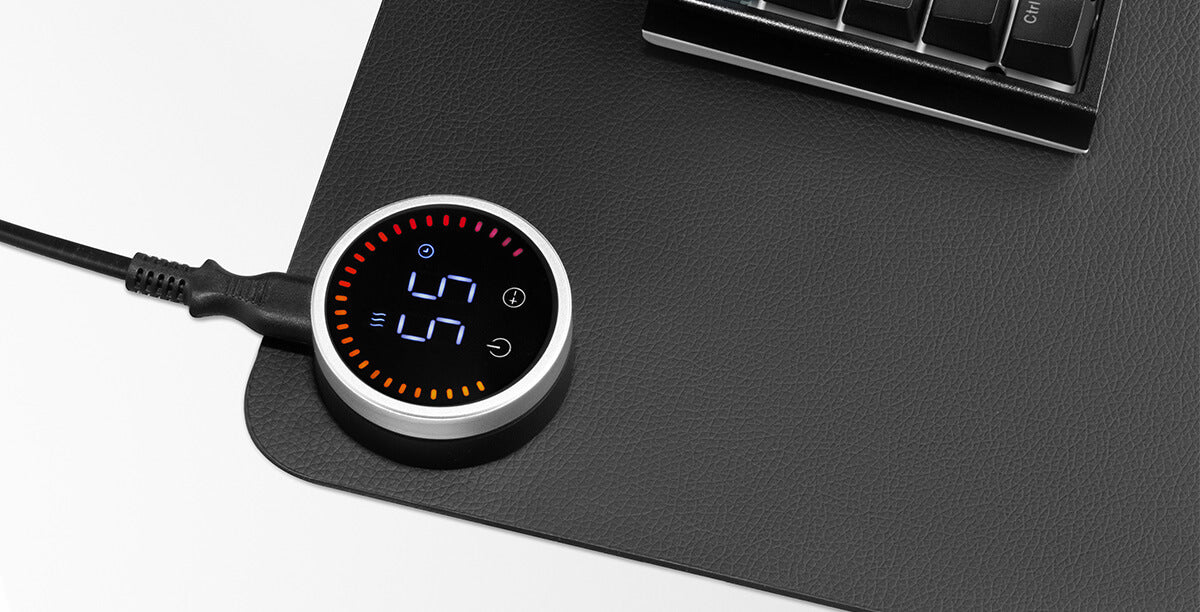
Minimal and Stylish
A clean, minimal design that fits naturally into your workspace, and stays there. Unlike other methods to warm your hands like space heaters, this heated desk pad looks like it actually belongs on your desk. The design is modern and minimal, and will instantly improve your workspace. It also isn't noisy and won't annoyingly blow on you like a space heater.
A More Efficient Way to Stay Warm
Targeted warmth without heating the entire room. Instead of warming unused space, the Hand Warmer focuses heat where it actually helps, at your desk, while you work. Many customers use it as a practical alternative to relying on central heating throughout the day.
Why this matters: Rising fuel and energy costs means warming the whole room can cost hundreds over the long term. The hand warmer uses 18 times less electricity than the average space heater.
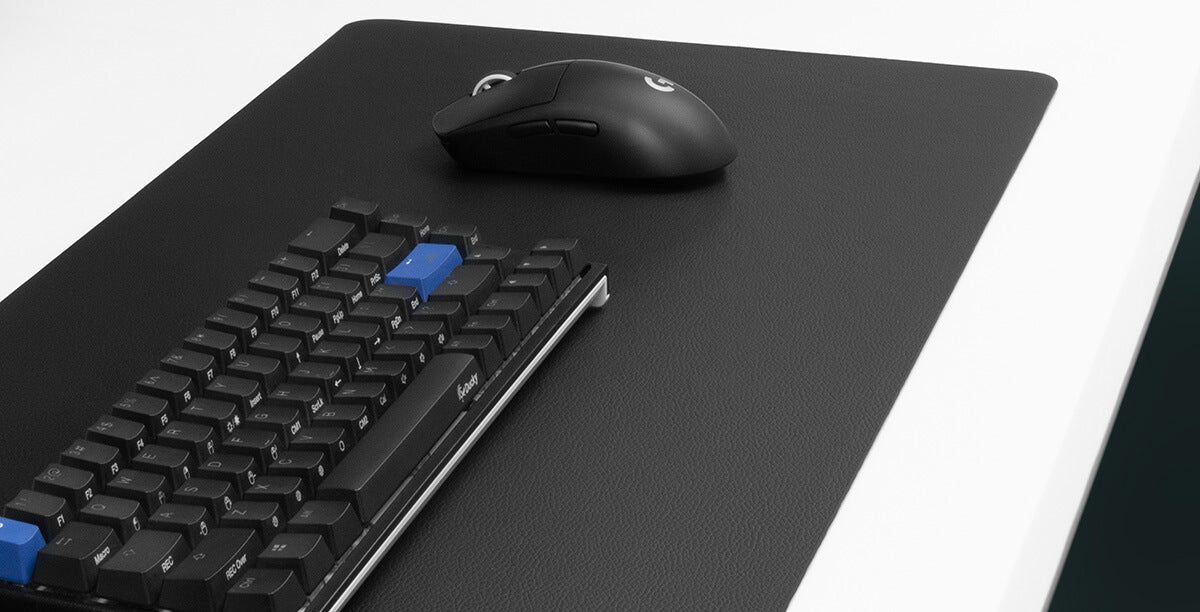
Built for Long-Term Daily Use
This isn't a seasonal gadget or a temporary fix. The Hand Warmer is built for repeated, daily use through long winters and busy workdays in cold workplaces and home offices. From our premium PVC leather material to stitched-edge construction, every detail is designed with longevity in mind, so it stays on your desk year after year. Replacing cheap alternatives costs more in the long run than buying once.
Perfect Fit for Your Workspace
End-to-end desk comfort at the right size. The Hand Warmer is sized to support your hands, keyboard, and mouse without crowding your workspace. It creates a warm, comfortable zone across the area you actually use, not just a small patch that leaves your hands shifting around.
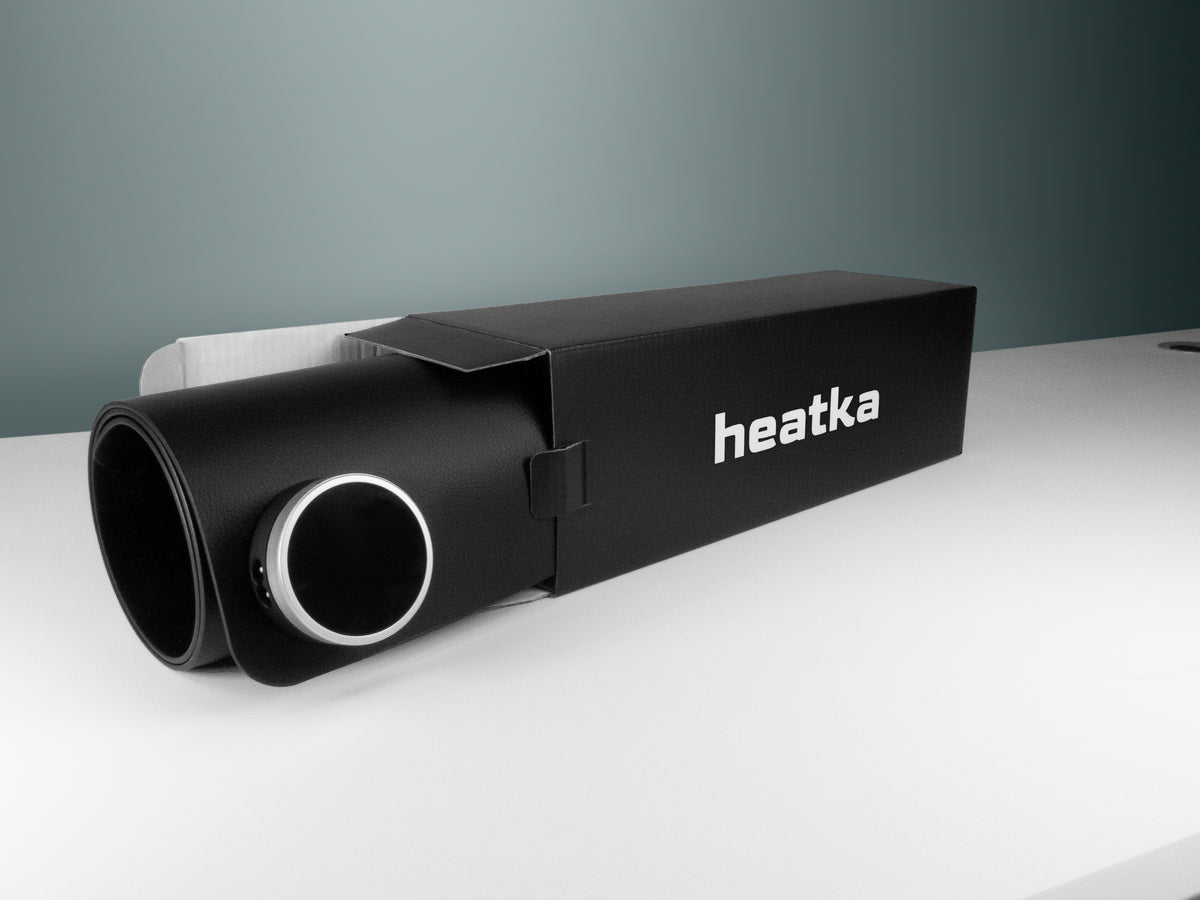
Backed by people who stand behind it.
Every Heatka Hand Warmer is covered by a hassle-free 2-year replacement warranty and supported by our US and UK-based team. If you ever need help, you'll speak to a real person who understands the product and stands behind it.
Why this matters: Most heated desk mat warranties last only 30 days. A Heatka desk mat gives you peace of mind now and in the future.
An honest comparison of every alternative
Wearing gloves reduces your dexterity, makes typing harder, doesn't warm palms
Space heaters heats the room not your hands, expensive to run all day, dries air, ineffective for those with poor hand circulation
Disposable hand warmers only last 45–90 minutes, and offer no wrist support
Splits apart, can easily show wear and the heating element can fail within months
This is so amazing for people who work in cold offices! Prior to having a Heatka, I was always freezing at work and having to tuck my hands under my armpits or my legs to keep them warm, not great for productivity! Now I have no issues feeling cold anymore as the heat that radiates from this is enough to keep my hands toasty, and I can rest my hands on the mat directly for extra warmth when needed. I did worry that the higher settings would be far too hot, but even the 55C is not too hot to put my hands directly onto it, and my keyboard and mousepad have held up fine. The auto-off feature is great too so I won't be anxious I've left it on and burnt the office down!
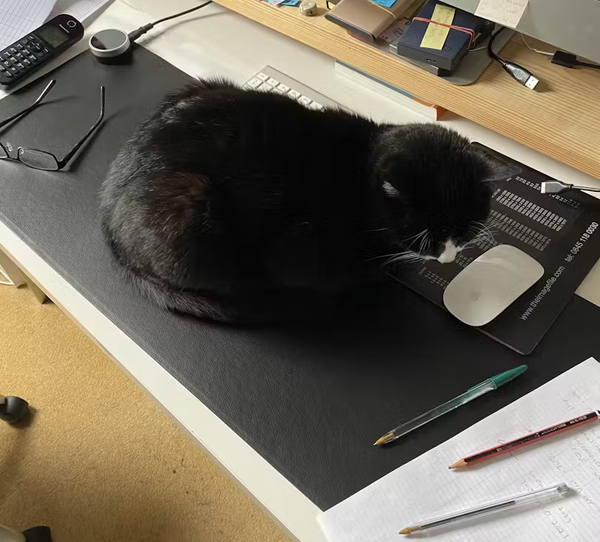
Blown away by how good this heated desk pad is. I work from home full-time and don't want to put the heating on for just my office, and electric heaters are expensive to run, even the most efficient ones. I've got cashmere wristwarmers, two layers of polar fleece and my hands are still cold. So I thought I'd try this. Absolute game changer. I've been using it for nearly 2 weeks, and it's been cold (below freezing outside). I only have it on the lowest setting and it keeps my forearms and hands toasty all day, every day. Makes working much more comfortable. And it is really cheap to run. I wasn't sure about the size but it's spot on. The only issue is the cat who also thinks it's great. 100% recommend.
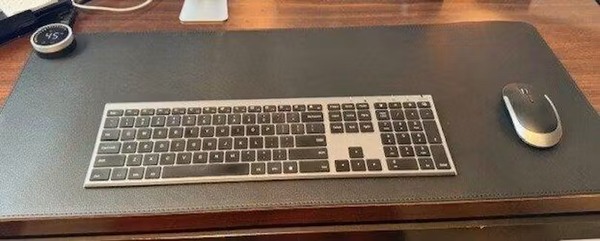
Cold hands while typing: GONE. Cold hands while using your mouse: GONE. Beyond comfortable, stylish, easy to set up and use. Worth EVERY SINGLE Penny. Don't wonder, don't let your hands be cold, buy it. You will love it and for the record I am not paid or sponsored. I just give the truth and my hands are so happy now!
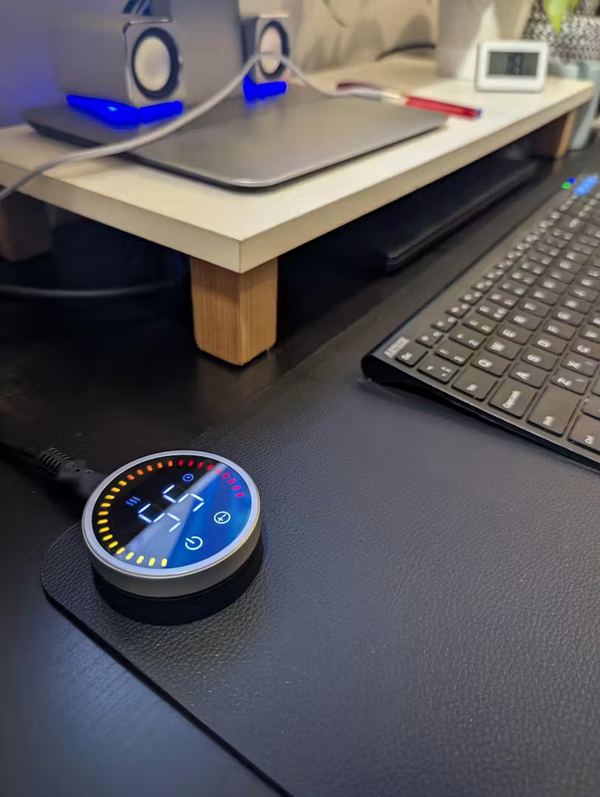
I'm a freelance graphic designer and suffer with Raynauds so my hands are cold most of the time due to poor circulation to the point they become painful and ache despite wearing compression gloves. We bought two of these for our home office and certainly for me it is a game changer! If you're undecided, please buy it, you won't be disappointed. Not only does this product help my hands feel comfortable, it's excellent quality and easy to use. Customer service was absolutely excellent and delivery was fast and well packaged. Overall shopping experience with Heatka has been amazing and I would highly recommend them to anyone!
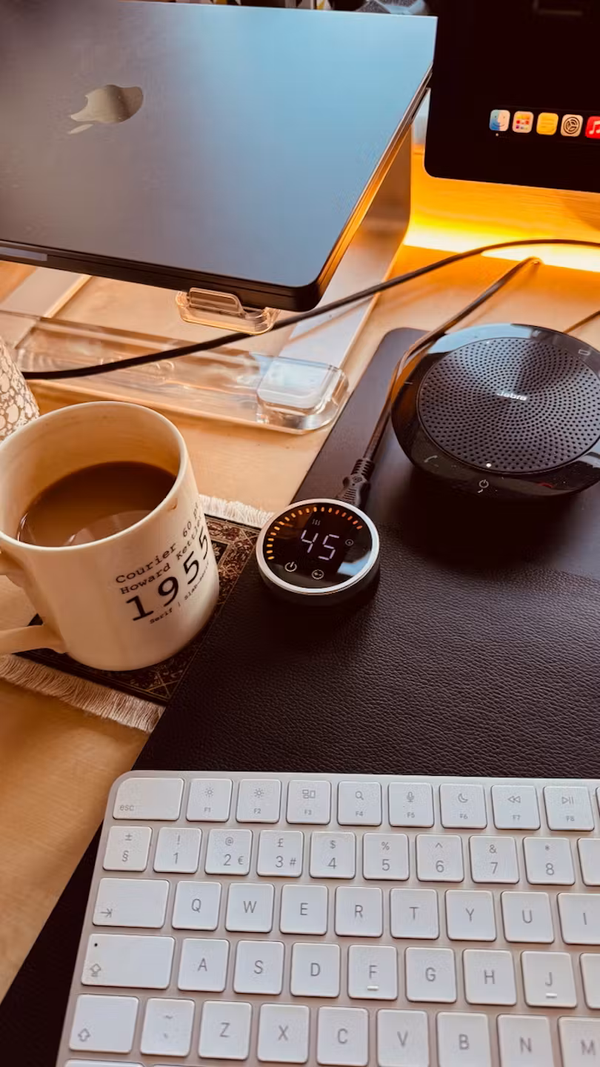
The warmth is almost instant, the settings are simple to adjust, and it's incredibly comfortable. I also bought one for a good friend — that is how good it is!
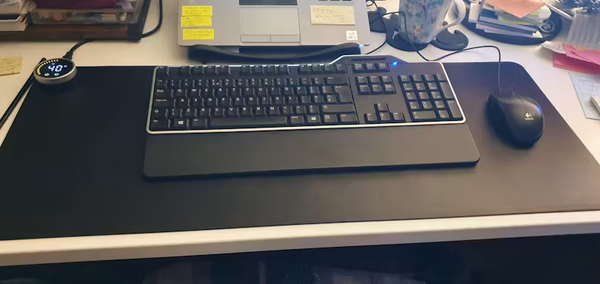
Really makes a difference to the hand situation and looks pretty nice on the desk.
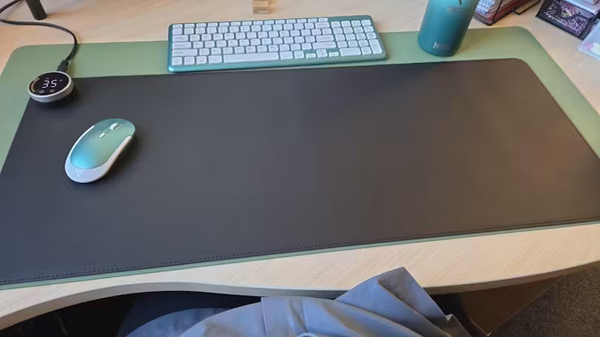
I was looking for a non-usb powered heated mat for my work for some ladies with Reynard's. We've bought 10 for work and they all go quickly and everyone is positive about them. I bought one for my wife as well for her arthritis and she loves it!! As do the people she works with.
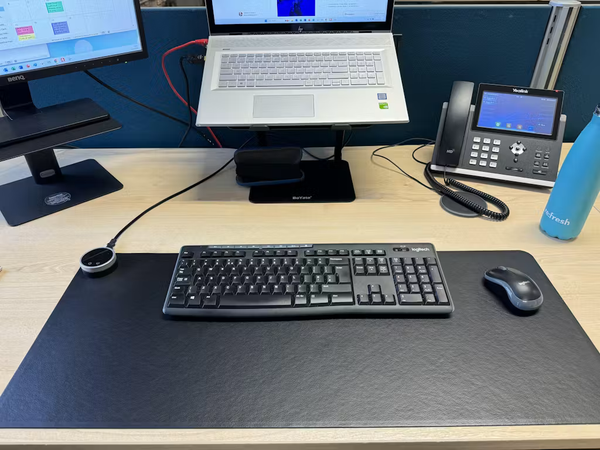
This is a superb product. I use this in the office and often get hands so cold I can't get them warm again. This keeps your hands warm and your arms too as you rest on it.
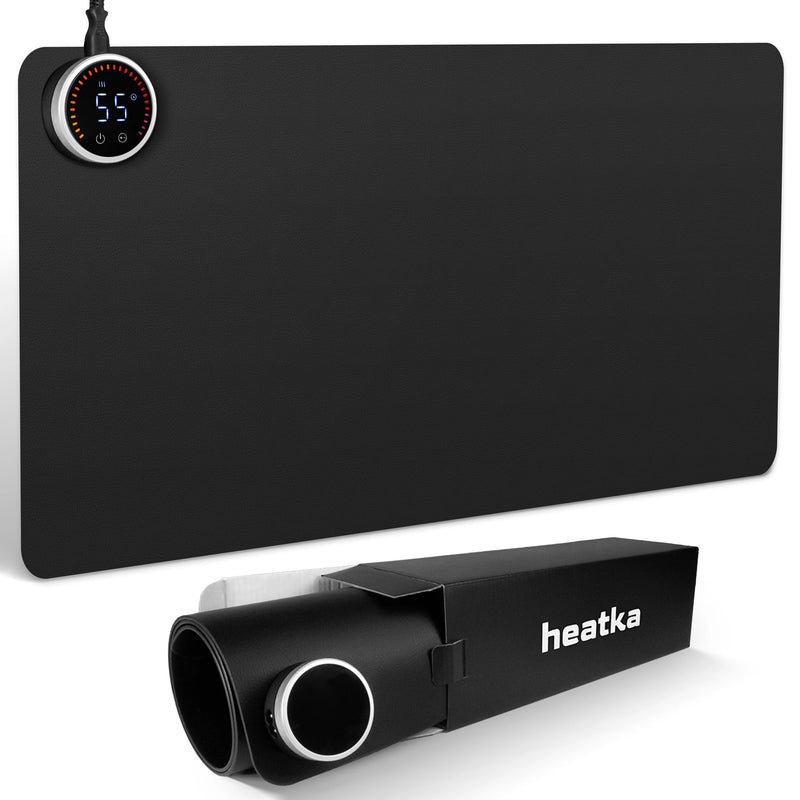
The original Heatka. Single-zone heating designed for hand and wrist warmth. Slim profile, premium PVC leather, LED dial control. Ideal if your keyboard sits off the mat.
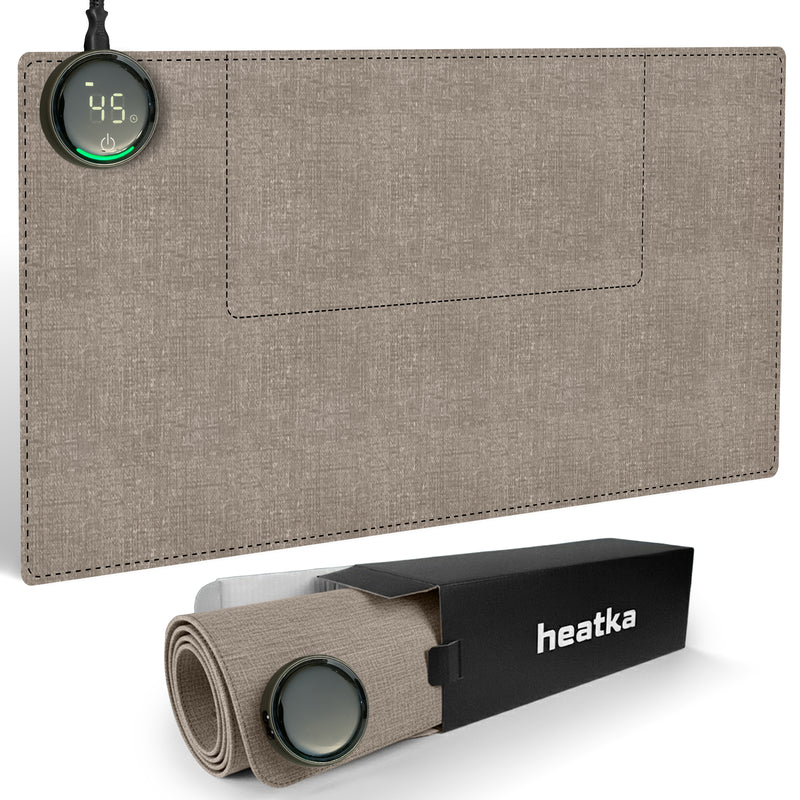
The upgraded Heatka with dual-zone heating: a dedicated hand-warming zone and a device-safe keyboard zone. Built for people whose entire workspace lives on the mat.
Compare this to what you've spent:
The Heatka is a one-time purchase, built to last years, with a 2-year warranty and free replacement support. Run the numbers: it pays for itself.
Cold hands don't wait for a convenient moment.
Ships same day or next business day. Free UK and US shipping.
Pick what you've been using. See what it adds up to. Then compare.
Calculating your savings…
Free. Every order ships free — no minimum order, no codes needed.
We ship the same day or the next business day after your order is placed.
UK orders: 1–2 business days. US orders: 2–5 business days. International times vary by destination.
Yes. Shortly after we ship you'll receive an email with your tracking information.
UK orders ship from Devon, England. US orders ship from Utah or Tennessee.
Yes. An order confirmation is sent immediately and a full invoice is included with your shipment.
Every single Heatka ships with a full 2-year replacement warranty. If your mat stops working as expected for any reason within that period, we replace it. No returns process, no lengthy investigation, no arguing. You contact us, we sort it.
Heating element, LED dial, internal wiring — any fault that affects normal operation.
Two full years from date of purchase. The longest warranty offered by any heated desk mat brand.
Email our support team. Real humans, not bots. Responses within minutes during business hours.
You've read this far because cold hands are genuinely affecting your work. Heatka solves that problem reliably, cleanly, and without the compromises of every other option you've tried.
100% satisfaction guarantee. 2-year warranty. Free UK & US delivery. Human support within minutes.
If it's not right, we'll make it right.
→ SHOP HEATKA | FREE DELIVERY"My only regret is that I didn't buy one sooner."
Elizabeth Julian

